Group Music Classes vs Private Lessons for Young Beginners

Introducing a child to music is an exciting milestone, but the initial setup determines whether they stick with it or drop it entirely. Many parents assume that the standard path involves sitting a child down for individual instruction right from the start. However, the format of those early sessions shapes how a young mind connects with rhythm, melody, and the instrument itself. Making an informed choice early on prevents frustration and keeps the experience engaging.

The initial exposure sets the tone for a child’s long-term relationship with music. When early sessions feel rigid or isolating, young beginners easily lose interest. The goal is to build a foundational curiosity, and the right format makes that happen naturally. Parents must weigh how their child interacts with others, their current attention span, and what kind of environment makes them feel secure before making a final decision.

For young children who are just getting started, group music classes for kids offer an approachable entry point that blends foundational skills with a shared social experience.

Why the First Music Experience Matters

An early introduction to music does more than teach a child how to play an instrument; it actually alters how they process sound and coordinate movement. The brain undergoes rapid development during preschool and early elementary years, making it the perfect window to introduce core concepts like pitch and steady beat. If the setup feels like a chore, the child will push back, regardless of their natural talent.

Engaging a young beginner requires a setting that matches their developmental stage. Children do not learn music the way adults do through sheer willpower and repetitive drilling. They learn by doing, moving, and hearing. A positive initial environment builds confidence, while a poorly matched setup can make a child feel like they are constantly failing to meet expectations.

Before signing up for any program, look closely at your child’s daily habits. Some kids thrive when they have peers to watch and mimic, while others need a quieter space to focus. Recognizing these traits beforehand saves time, money, and avoidable arguments about practicing at home.

What Children Learn in Group Music Classes

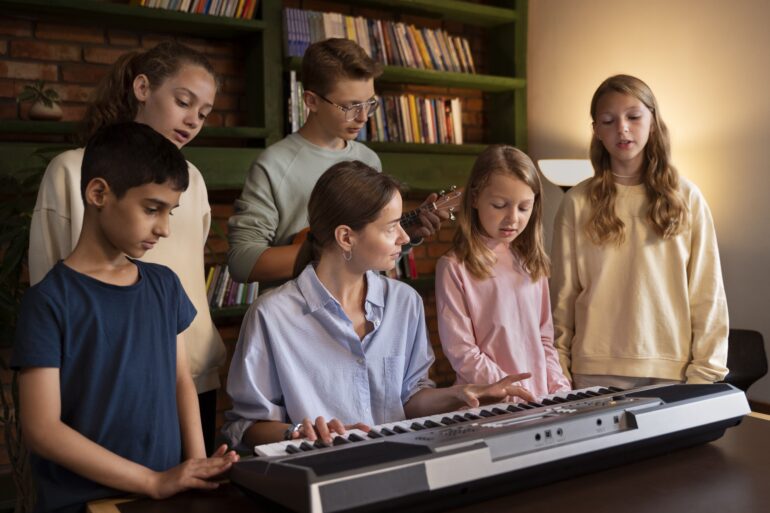
Group sessions for young beginners rarely involve sitting still at a keyboard for an hour. Instead, these programs focus on conceptual understanding through interactive, physical activities. Children absorb the fundamentals of music theory by playing games, singing, and using simple percussion instruments to internalize a steady beat before they ever worry about reading complex sheet music.

Rhythm and listening skills develop naturally when children practice them together. Moving to music, clapping patterns, and participating in call-and-response activities teach kids to listen to the sounds around them while managing their own physical movements. This shared timing builds a physical sense of rhythm that serves as a permanent foundation for any instrument they choose later.

Social proof plays a massive role in how young children build confidence. Seeing peers attempt a new skill makes the task feel achievable. If a child makes a mistake in a group, it feels like a normal part of the game rather than an isolating failure, which keeps them willing to try again.

When you are ready to find a structured program that emphasizes this collaborative approach, you can enroll music classes for kids to get them started alongside their peers.

How Private Music Lessons Work
Private Music Lessons

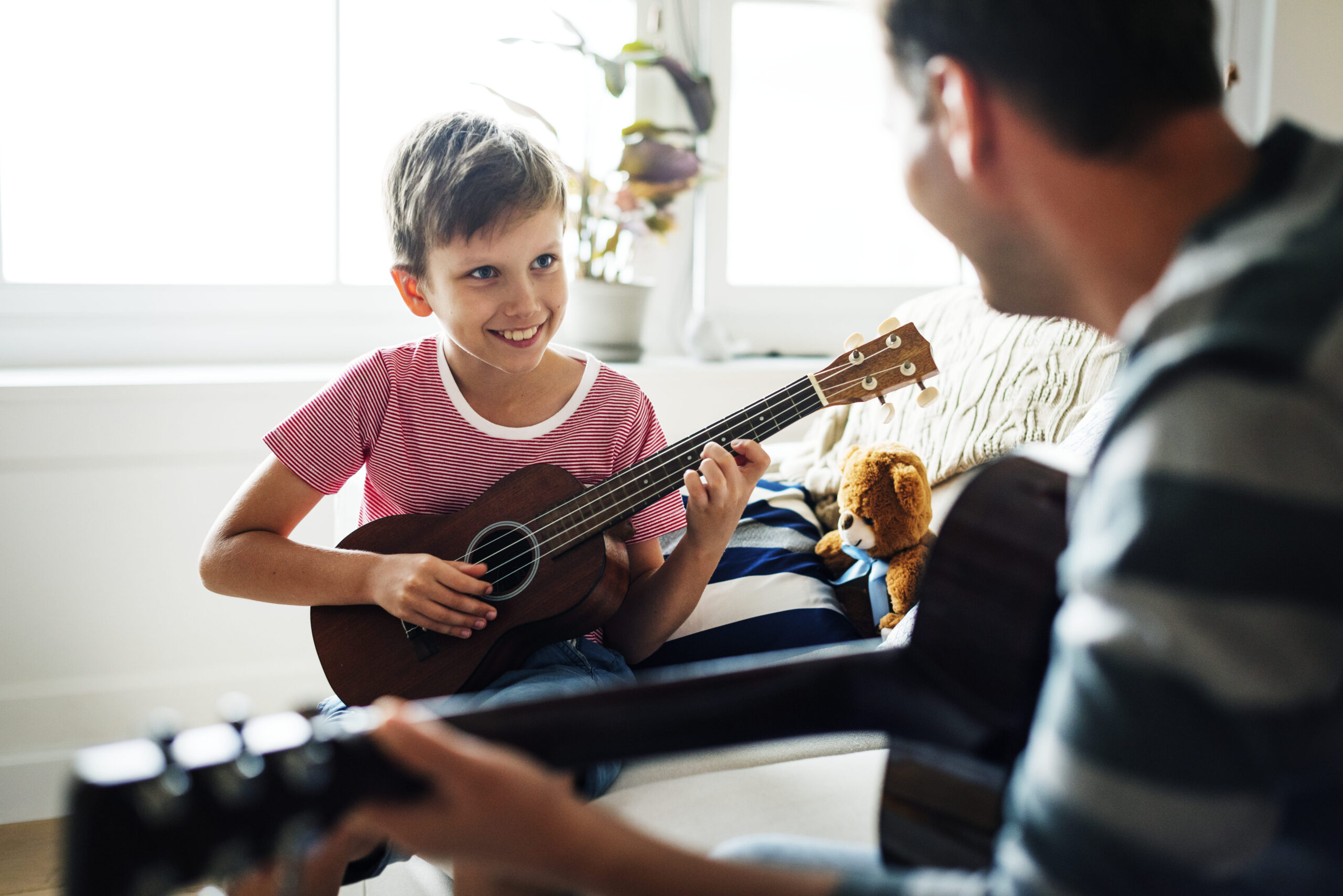
Private lessons follow the traditional model of one teacher working with one student. This structure allows the instructor to modify every minute of the lesson to match the student’s immediate needs. If a child grasps a concept quickly, the teacher moves ahead; if the child struggles with a specific hand position, the lesson stops until they get it right.

This individual attention is highly effective for refining specific techniques and reaching targeted performance goals. The instructor catches small errors in posture or finger placement immediately, preventing bad habits from forming. The focus remains entirely on the student’s personal progress, with no distractions from other children.

This format makes the most sense for older children or beginners who already possess a clear focus and strong fine motor skills. If a child specifically demands to learn a single instrument and shows the maturity to sit quietly with an adult for thirty to forty-five minutes, private instruction can yield excellent results. For younger toddlers, however, the intense focus can sometimes feel overwhelming.

Group Classes vs Private Lessons: A Side-by-Side Comparison

Learning Style

Group classes rely heavily on collaborative learning, where children pick up cues from one another and participate in team-based musical games. Private lessons focus strictly on personalized instruction, tailoring the curriculum to the individual student’s strengths and weaknesses without any group dynamics.

Social Development

The group format provides immediate opportunities for communication, cooperative playing, and building social confidence in a classroom setting. Private lessons offer a direct mentorship dynamic with an adult instructor, which builds accountability but lacks peer-to-peer social interaction.

Pace and Flexibility

A group environment follows a structured, predictable curriculum designed to move the class forward together through foundational milestones. Private lessons offer complete flexibility, allowing the pace to speed up or slow down based entirely on how fast the individual child masters each piece.

Motivation and Practice

Children in groups are often motivated by the shared experience and the desire to keep up with their friends, making home practice feel like preparation for a group activity. Private students rely on internal motivation or parental encouragement, as their progress is evaluated solely on an individual basis during their next session.

Which Option Is Better for Preschool and Early Elementary Children?

Preschoolers and early elementary students generally find success in a shared learning environment. At ages three through seven, children are accustomed to learning through play and social imitation. For families exploring options like piano lessons for toddlers Centennial, choosing an age-appropriate group program introduces keyboard skills without stripping away the fun.

Age, personality, and developmental readiness should guide the ultimate decision. A highly social child who loves group activities will likely find private lessons lonely and tedious. Conversely, a child who gets easily overstimulated by crowds might feel safer in a one-on-one setting. Look at how your child behaves in preschool or recreational activities to gauge which environment will make them feel most comfortable.

For the majority of young beginners, starting in a group creates a gentle bridge into the world of music. It removes the pressure of solo performance while establishing the identical foundational skills required for advanced private study later on. Once they have developed a strong internal sense of rhythm and a love for music, transitioning to private lessons becomes a natural next step.

Questions to Ask Before You Enroll

Look closely at how your child handles instructions in daily life. Do they learn best by watching others, or do they need direct, hands-on guidance from you? A child who thrives on social cues will naturally sink into a group format, whereas a child who asks constant questions and wants immediate feedback might prefer the direct line of a private teacher.

Consider your long-term goals for your child’s musical education. If you want them to develop a lifelong appreciation for music, a sense of rhythm, and basic ear training, a group class satisfies those needs perfectly. If your goal is immediate mastery of a highly specific, complex instrument for competitive performance, you will eventually need individual training.

Be realistic about the level of parent involvement required by the program. Many early childhood music classes require a parent to sit in and participate, turning the lesson into a shared bonding experience. Private lessons often involve parents dropping the child off or sitting quietly in the background, placing the responsibility for practice directly on the student and teacher.

Finding a program that strikes a balance between enjoyment and skill development keeps your child coming back week after week. If you are ready to explore options and want to see how an interactive, group-centered approach can benefit your young beginner, reach out us to find a local studio and schedule a visit.
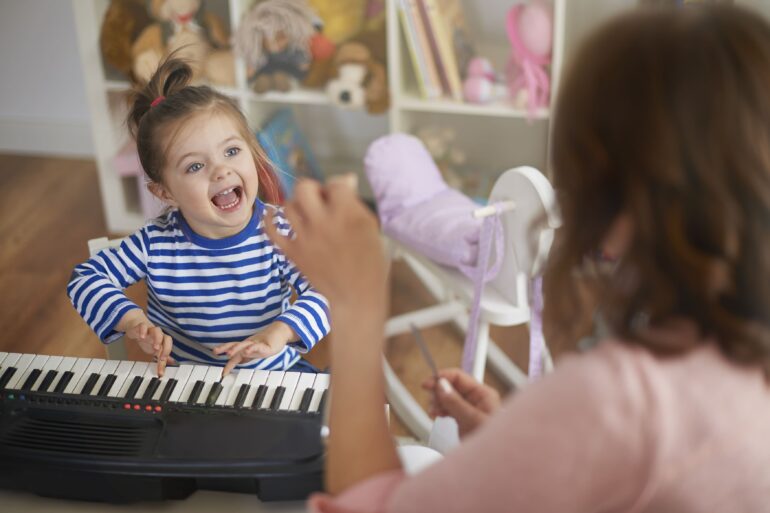
Beginner Piano Lessons for Kids: What Parents Should Expect in the First Year

Starting a musical journey can feel monumental for a young family, but managing your expectations before day one helps keep everyone grounded. Many parents enroll their children with visions of classical masterpieces echoing through the house within a few months. The reality of the introductory year is far more grounded, focusing heavily on fine motor coordination, pattern recognition, and basic listening skills. Recognizing how a child actually processes musical concepts keeps the early stages productive and prevents unnecessary friction.

The first twelve months serve entirely as a setup phase for physical mechanics and cognitive habits. Children need to build an intuitive relationship with the keyboard before they can tackle complex sheet music or advanced finger techniques. For families exploring structured musical programs, choosing high-quality beginner piano lessons for kids introduces these foundational skills through an age-appropriate format that values engagement over high-pressure drilling.

What the First Year of Piano Lessons Looks Like

The initial months of piano study are less about technical precision and more about building basic familiarity with the instrument itself. Expect the early lessons to focus on identifying groups of black and white keys, understanding high and low pitches, and discovering how physical movement changes the sound. Instructors use physical interaction to demystify the large instrument, breaking it down into approachable zones that a young child can grasp without feeling overwhelmed.

Young children learn best when musical concepts are translated into physical experiences rather than abstract lectures. A quality introductory curriculum integrates rhythmic games, full-body movement, singing, and simple melodies that keep kids active. Clapping out rhythms or singing a melody before touching the keys makes sure the brain registers the pattern first, making the actual playing portion far more intuitive.

Real progress develops steadily rather than quickly, often appearing in small behavioral shifts rather than sudden, dramatic jumps in performance. A child might spend weeks mastering the concept of a steady beat or learning how to rest specific fingers while using others. Recognizing these subtle milestones as legitimate growth prevents parents from feeling like the lessons are stalling when a child plays the same short song for several weeks.

When you are ready to secure a spot in a classroom format that values this developmental progression, completing the kids music class registration ensures your child enters a structured program tailored precisely to their age bracket.

Skills Children Typically Build During Year One Skills Children

Piano Foundations

Young beginners start by building spatial awareness across the keyboard, learning how to position their bodies comfortably without slouching. Instructors guide them through proper finger placement, encouraging relaxed, curved fingers rather than flat, rigid hands. By practicing short, repetitive melodies, children learn how to isolate individual finger movements while keeping a steady wrist position.

Music Reading

Early literacy in music involves breaking down abstract notation into recognizable visual patterns. Children learn to identify basic musical symbols, recognize lines and spaces on a staff, and track notes moving up or down. Alongside note names, they build a functional understanding of a steady beat, learning how different note shapes dictate timing and rhythm.

Listening and Coordination

Ear training happens simultaneously with physical practice as children learn to match the pitches they hear with the keys under their fingers. This process forces the brain to translate an auditory cue into a specific muscle movement. Over time, following these musical patterns sharpens a child’s overall focus and teaches them to self-correct when a note sounds off.

How Children Usually Progress Throughout the Year

The initial phase of the year focuses almost entirely on building comfortable classroom routines and establishing personal confidence. Children spend these early months learning how to sit properly, follow the instructor’s cues, and navigate basic assignments. The musical material remains intentionally simple during this phase to make sure the child feels successful every time they approach the piano.

As the middle of the year approaches, you will notice a distinct shift toward growing independence. Instead of relying constantly on an instructor or parent to point to every note, children begin recognizing familiar patterns on their own. They start playing short pieces with fewer hesitations, showing a clearer understanding of how rhythmic structures fit together without needing constant verbal reminders.

By the end of the first year, a solid musical understanding begins to surface in daily practice. Students can comfortably talk about basic music theory, identify symbols on sight, and play a variety of simple songs with correct posture and timing. For parents seeking specialized instruction in the area, enrolling in beginner piano classes Centennial CO gives young learners access to targeted group environments that foster this exact developmental trajectory.

How Parents Can Support Learning at Home

The most effective way to help a young beginner is to establish a predictable, low-stress practice routine right from the start. Ten to fifteen minutes of focused, daily attention is infinitely better than a grueling one-hour session the night before class. Tie the practice time to an existing daily habit, such as practicing right before dinner or immediately after school, so it becomes a normal part of the day.

Keep home practice sessions light and interactive rather than turning them into strict, disciplinary lectures. If a child hits a wall with a difficult measure, encourage them to take a break, clap the rhythm, or sing the notes instead of forcing them to play through frustration. Your role at home is to act as an encouraging audience member rather than a rigid enforcer, keeping the emotional connection to the instrument positive.

Celebrate steady, incremental improvement rather than focusing strictly on flawless execution. A child who manages to keep a steady beat through a single line has achieved a real win, even if they hit a wrong note along the way. Recognizing the effort it takes to coordinate these new physical actions keeps motivation high and teaches children that mastery is a gradual process.

Signs a Beginner Piano Program Is Working

You can easily gauge the effectiveness of a program by observing your child’s general attitude on lesson days. When a curriculum matches a child’s developmental level, they look forward to attending class and feel excited about seeing their instructor or peers. If the environment is supportive and engaging, the natural anxiety of learning a new skill fades away, replaced by genuine curiosity.

Growing confidence during home practice is another clear indicator that the teaching methods are sinking in. When a child approaches the piano without being begged, or proudly shows you a specific passage they finally figured out, the program is doing its job. This developing autonomy proves that the child views the instrument as a source of personal achievement rather than an external chore.

The benefits of structured piano training frequently spill over into other areas of a child’s daily life. Parents often notice improvements in general listening skills, sharper mental focus during school tasks, and better patience when tackling multi-step problems. These cognitive gains happen naturally as the brain adapts to the dual demands of reading visual notation while managing precise physical coordination.

Finding an organization that prioritizes this balanced approach keeps your child engaged through the foundational stages of music education. If you want to explore how a specialized curriculum can set your child up for a lifetime of musical enjoyment, connect to us to speak with our team and learn more about our local class options.

Choosing a Beginner Piano Program That Builds Long-Term Success

When evaluating different studios, look closely at whether their teaching methods match the developmental realities of early childhood. Programs that rely strictly on dry, adult-style methodology often burn young children out before they finish their first year. Seek out a curriculum that values active participation, socialization, and physical movement to keep the concepts accessible and exciting.

The specific instructors involved make a massive difference in how a child views the entire experience. A great early childhood music teacher possesses the patience to handle short attention spans and the skill to pivot when a child gets frustrated. They know how to turn a technical correction into a creative challenge, making sure the student leaves the session feeling capable.

Ultimately, you want a structured environment that focuses equally on developing musical mechanics and nurturing a child’s internal confidence. A curriculum that pushes technical perfection too early risks killing a child’s natural interest in music. Prioritizing a balanced program ensures that your child builds a rock-solid foundation of skills while genuinely enjoying the process of learning to play.

Page 1 of 1