
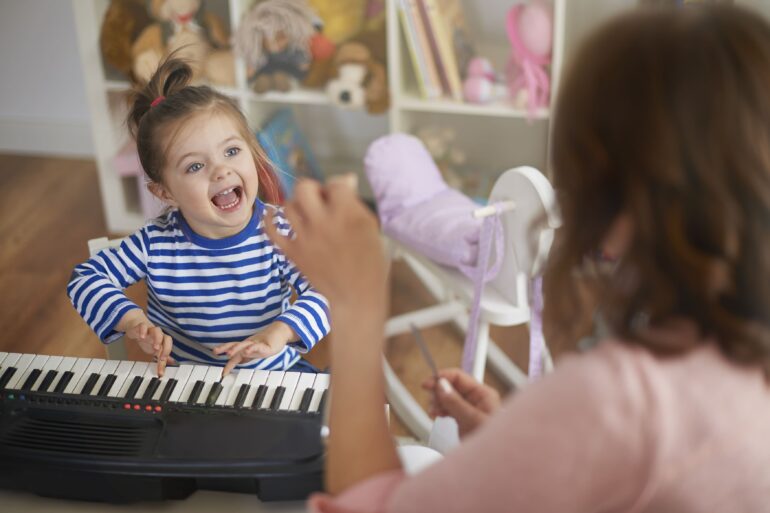
Starting a musical journey can feel monumental for a young family, but managing your expectations before day one helps keep everyone grounded. Many parents enroll their children with visions of classical masterpieces echoing through the house within a few months. The reality of the introductory year is far more grounded, focusing heavily on fine motor coordination, pattern recognition, and basic listening skills. Recognizing how a child actually processes musical concepts keeps the early stages productive and prevents unnecessary friction.
The first twelve months serve entirely as a setup phase for physical mechanics and cognitive habits. Children need to build an intuitive relationship with the keyboard before they can tackle complex sheet music or advanced finger techniques. For families exploring structured musical programs, choosing high-quality beginner piano lessons for kids introduces these foundational skills through an age-appropriate format that values engagement over high-pressure drilling.
What the First Year of Piano Lessons Looks Like
The initial months of piano study are less about technical precision and more about building basic familiarity with the instrument itself. Expect the early lessons to focus on identifying groups of black and white keys, understanding high and low pitches, and discovering how physical movement changes the sound. Instructors use physical interaction to demystify the large instrument, breaking it down into approachable zones that a young child can grasp without feeling overwhelmed.
Young children learn best when musical concepts are translated into physical experiences rather than abstract lectures. A quality introductory curriculum integrates rhythmic games, full-body movement, singing, and simple melodies that keep kids active. Clapping out rhythms or singing a melody before touching the keys makes sure the brain registers the pattern first, making the actual playing portion far more intuitive.
Real progress develops steadily rather than quickly, often appearing in small behavioral shifts rather than sudden, dramatic jumps in performance. A child might spend weeks mastering the concept of a steady beat or learning how to rest specific fingers while using others. Recognizing these subtle milestones as legitimate growth prevents parents from feeling like the lessons are stalling when a child plays the same short song for several weeks.
When you are ready to secure a spot in a classroom format that values this developmental progression, completing the kids music class registration ensures your child enters a structured program tailored precisely to their age bracket.
Skills Children Typically Build During Year One 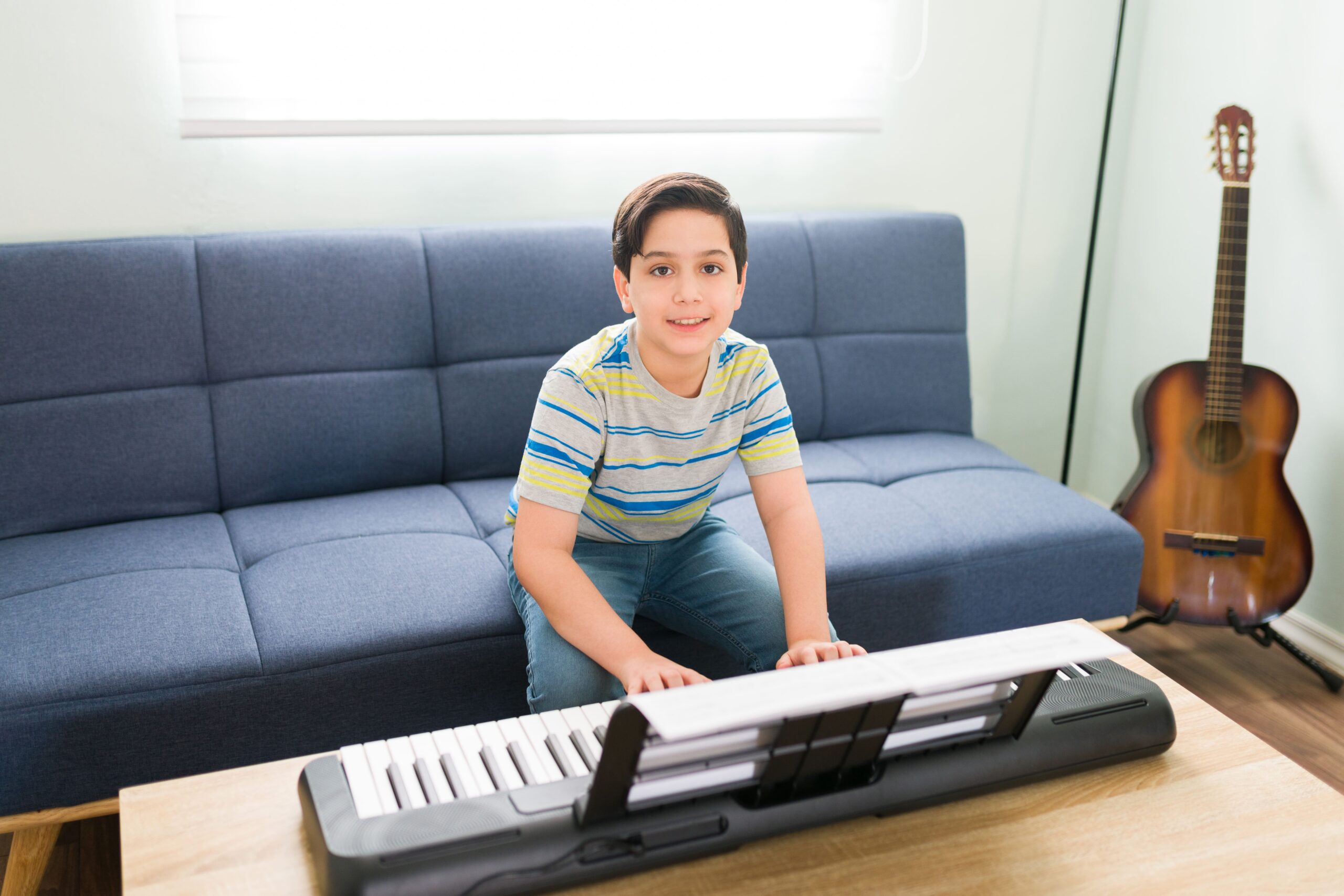
Piano Foundations
Young beginners start by building spatial awareness across the keyboard, learning how to position their bodies comfortably without slouching. Instructors guide them through proper finger placement, encouraging relaxed, curved fingers rather than flat, rigid hands. By practicing short, repetitive melodies, children learn how to isolate individual finger movements while keeping a steady wrist position.
Music Reading
Early literacy in music involves breaking down abstract notation into recognizable visual patterns. Children learn to identify basic musical symbols, recognize lines and spaces on a staff, and track notes moving up or down. Alongside note names, they build a functional understanding of a steady beat, learning how different note shapes dictate timing and rhythm.
Listening and Coordination
Ear training happens simultaneously with physical practice as children learn to match the pitches they hear with the keys under their fingers. This process forces the brain to translate an auditory cue into a specific muscle movement. Over time, following these musical patterns sharpens a child’s overall focus and teaches them to self-correct when a note sounds off.
How Children Usually Progress Throughout the Year
The initial phase of the year focuses almost entirely on building comfortable classroom routines and establishing personal confidence. Children spend these early months learning how to sit properly, follow the instructor’s cues, and navigate basic assignments. The musical material remains intentionally simple during this phase to make sure the child feels successful every time they approach the piano.
As the middle of the year approaches, you will notice a distinct shift toward growing independence. Instead of relying constantly on an instructor or parent to point to every note, children begin recognizing familiar patterns on their own. They start playing short pieces with fewer hesitations, showing a clearer understanding of how rhythmic structures fit together without needing constant verbal reminders.
By the end of the first year, a solid musical understanding begins to surface in daily practice. Students can comfortably talk about basic music theory, identify symbols on sight, and play a variety of simple songs with correct posture and timing. For parents seeking specialized instruction in the area, enrolling in beginner piano classes Centennial CO gives young learners access to targeted group environments that foster this exact developmental trajectory.
How Parents Can Support Learning at Home
The most effective way to help a young beginner is to establish a predictable, low-stress practice routine right from the start. Ten to fifteen minutes of focused, daily attention is infinitely better than a grueling one-hour session the night before class. Tie the practice time to an existing daily habit, such as practicing right before dinner or immediately after school, so it becomes a normal part of the day.
Keep home practice sessions light and interactive rather than turning them into strict, disciplinary lectures. If a child hits a wall with a difficult measure, encourage them to take a break, clap the rhythm, or sing the notes instead of forcing them to play through frustration. Your role at home is to act as an encouraging audience member rather than a rigid enforcer, keeping the emotional connection to the instrument positive.
Celebrate steady, incremental improvement rather than focusing strictly on flawless execution. A child who manages to keep a steady beat through a single line has achieved a real win, even if they hit a wrong note along the way. Recognizing the effort it takes to coordinate these new physical actions keeps motivation high and teaches children that mastery is a gradual process.
Signs a Beginner Piano Program Is Working
You can easily gauge the effectiveness of a program by observing your child’s general attitude on lesson days. When a curriculum matches a child’s developmental level, they look forward to attending class and feel excited about seeing their instructor or peers. If the environment is supportive and engaging, the natural anxiety of learning a new skill fades away, replaced by genuine curiosity.
Growing confidence during home practice is another clear indicator that the teaching methods are sinking in. When a child approaches the piano without being begged, or proudly shows you a specific passage they finally figured out, the program is doing its job. This developing autonomy proves that the child views the instrument as a source of personal achievement rather than an external chore.
The benefits of structured piano training frequently spill over into other areas of a child’s daily life. Parents often notice improvements in general listening skills, sharper mental focus during school tasks, and better patience when tackling multi-step problems. These cognitive gains happen naturally as the brain adapts to the dual demands of reading visual notation while managing precise physical coordination.
Finding an organization that prioritizes this balanced approach keeps your child engaged through the foundational stages of music education. If you want to explore how a specialized curriculum can set your child up for a lifetime of musical enjoyment, connect to us to speak with our team and learn more about our local class options.
Choosing a Beginner Piano Program That Builds Long-Term Success
When evaluating different studios, look closely at whether their teaching methods match the developmental realities of early childhood. Programs that rely strictly on dry, adult-style methodology often burn young children out before they finish their first year. Seek out a curriculum that values active participation, socialization, and physical movement to keep the concepts accessible and exciting.
The specific instructors involved make a massive difference in how a child views the entire experience. A great early childhood music teacher possesses the patience to handle short attention spans and the skill to pivot when a child gets frustrated. They know how to turn a technical correction into a creative challenge, making sure the student leaves the session feeling capable.
Ultimately, you want a structured environment that focuses equally on developing musical mechanics and nurturing a child’s internal confidence. A curriculum that pushes technical perfection too early risks killing a child’s natural interest in music. Prioritizing a balanced program ensures that your child builds a rock-solid foundation of skills while genuinely enjoying the process of learning to play.

 Pin It